Home Video Tutorials Script Ratings News Stories Submit A CMS RSS Feed Contact Us you are 1 of 1081 people online  


clear
clear
arrow  Free 3 Months of CMS Hosting
arrow  Free Magazines & Tech Papers
arrow  Free Video Tutorials
clear
clear
arrow  Programming / Graphic Design
arrow  Hosting Providers
arrow  commercialCMS
clear
clear
 arrow  All PHP Demos (237)
 arrow  CMS / Portals (122)
 arrow  Forums (21)
 arrow  Lite (20)
 arrow  Blogs (16)
 arrow  Groupware (13)
 arrow  Learning Management (11)
 arrow  eCommerce (10)
 arrow  Image Galleries (10)
 arrow  Miscellaneous (8)
 arrow  Wiki (6)
clear
clear
arrow synType CMS listing updated
February 9 2010 05:14 am
arrow Gekko Web Builder listing ...
February 8 2010 02:19 pm
arrow Methods for Animation Effe...
February 8 2010 04:56 am
arrow Implement Dynamic Menus an...
February 8 2010 04:41 am
arrow Kryn.cms listing updated
February 7 2010 02:22 pm
arrow FlatPress listing updated
February 7 2010 01:39 pm
arrow Croogo listing updated
February 7 2010 01:30 pm
arrow Typo3 listing updated
February 7 2010 01:24 pm
arrow Website Baker demo updated
February 7 2010 01:07 pm
arrow LifeType demo updated
February 7 2010 12:55 pm
arrow Serendipity listing updated
February 7 2010 12:47 pm
arrow NinkoBB listing updated
February 7 2010 12:42 pm
arrow Limny 2.0 released! story ...
February 7 2010 05:55 am
arrow OpenRat CMS listing updated
February 5 2010 06:13 am
arrow Limny demo updated
February 5 2010 01:48 am
arrow Mac's PHP5+ MVC Framework ...
February 4 2010 01:52 am
arrow Piwigo listing updated
February 4 2010 01:04 am
arrow html-edit CMS listing updated
February 3 2010 04:15 pm
arrow ReOS - Real Estate Open So...
February 3 2010 06:02 am
arrow OneFileCMS listing updated
February 3 2010 04:19 am
clear
clear


clear
clear

buyhttp


clear
clear


clear
clear
arrow  February 2010 (6)
arrow  January 2010 (6)
arrow  2009 (88)
arrow  2008 (11)
arrow  2007 (8)
arrow  2006 (37)
arrow  2005 (92)
arrow  2004 (42)
clear
  Drupal Bookmark and Share
clear
Web Site

Drupal 6.15
clear
User Ratings:

Rating: 4.0/5 (12198 votes cast) click stars to cast vote

Category: CMS / Portals
Stable Release: 6.15
Listing Last Updated: December 19 2009 01:51 pm
Native Language: English


Try The Drupal Demo: Demo FAQ
clear
due to the popularity of the Drupal demo we have provided 2 separate demos

Demo Main Page #1: Main Page
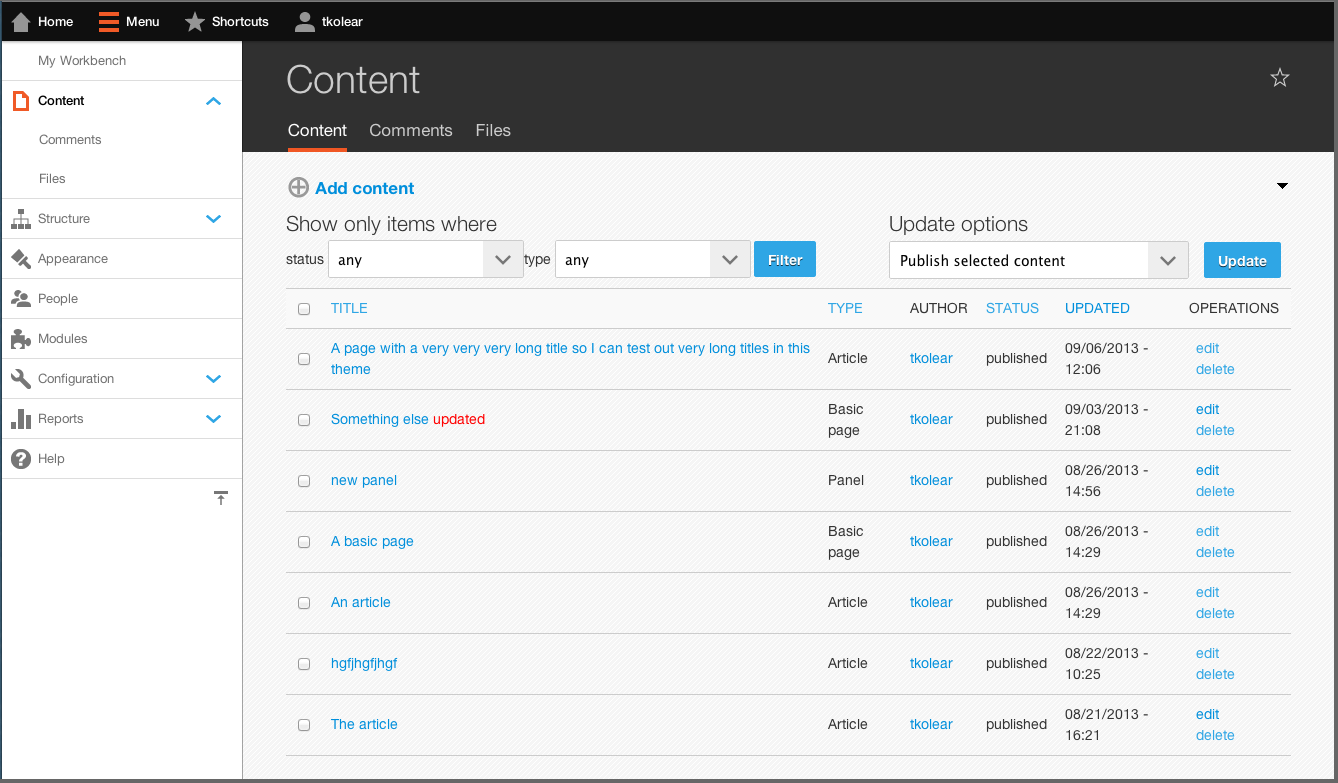
Demo Admin Page #1: Admin Page
Admin Username: admin
Admin Password: demo123

clear

Demo Main Page #2: Main Page
Demo Admin Page #2: Admin Page
Admin Username: admin
Admin Password: demo123
This demo will be deleted and reinstalled in

Watch Free Drupal Tutorial Videos
opensourcecms.com is now offering free streaming video tutorials showing you step-by-step how to manage Drupal. These free streaming videos will show you how to manage blocks, configure options, install Drupal via Fantastico, manage plugins, change Drupal passwords and much more.

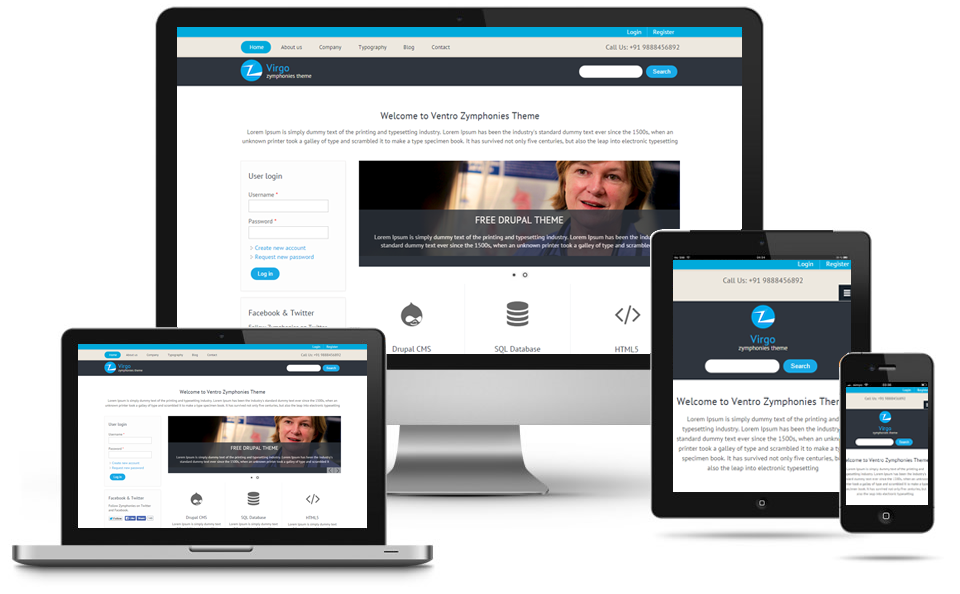
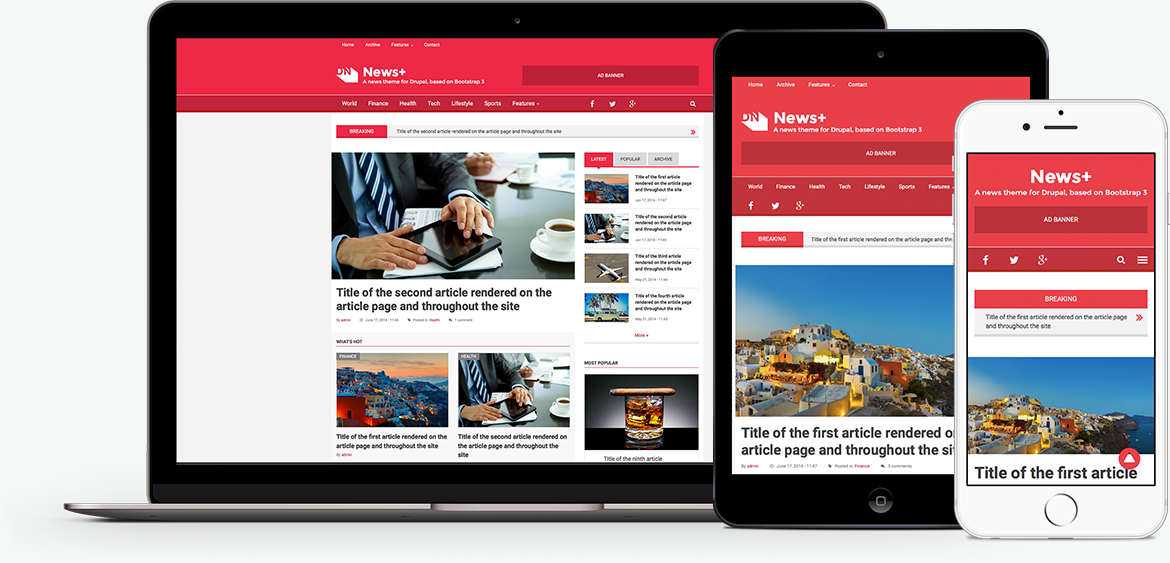
Drupal themes Premium Drupal Themes from TopNotchThemes

After you've installed Drupal. . .
Instantly download ready-to-launch Drupal themes with gorgeous, original designs and extensive features, created by Drupal experts! Our themes hand you more of Drupal's power and flexibility.
  • Themes for Drupal 5 and 6, with tons of content regions and theme settings to customize your site without writing any code
  • Built in support for popular third-party modules, including Views, and Ubercart themes for e-commerce
  • Find the best Drupal themes at TopNotchThemes now!

Packt Publishing presents Drupal: Blogs, Forums, Portals and Community Websites.

How to setup, configure and customise this powerful PHP/MySQL based Open Source CMS. A complete guide to every aspect of creating a variety of different websites using Drupal. A trove of well-considered and practical information is presented in a logical and intuitive manner so that you can either build up your site step by step by reading from cover to cover or, alternatively, focus on your specific needs by diving into each chapter as required.
  • Install, configure, administer, maintain and extend Drupal
  • Control access with users, roles and permissions
  • Structure your content using Drupal's powerful CMS features
  • Includes coverage of release 4.7

Drupal Description:
clear
Drupal is software that allows an individual or a community of users to easily publish, manage and organize a great variety of content on a website. Tens of thousands of people and organizations have used Drupal to set up scores of different kinds of web sites. Drupal is open source software licensed under the GPL, and is maintained and developed by a community of thousands of users and developers.

User Comments:
Sort By:
clear
1 | 2 | 3 | 4 | 5 | 6 | 7 | 8 | 9 | 10 | 11 | 12 | 13 | 14 | 15 | 16 | 17 | 18 | 19 | 20 | 21 | 22
Many of these negative comments sound like they're coming from developers who need a bit of hand-holding and want something quick and easy. Drupal is very customizable but because of that fact, choosing the appropriate modules can be intimidating. Here's what I install for any basic Drupal 6.x site.
Views, CCK, WYSIWYG API, TinyMCE editor, PathAuto, IMCE, Admin Menu and sometimes Panels.
Views and Admin Menu are a must. Admin Menu provides a bar at the top of all pages whenever you're logged in with edit capabilities.
Add IMCE_Mkdir to create and delete directories for file and image management.
A major plus of other CMS such as Joomla, Sitecore, Ektron, Wordpress, etc is a consistent editing interface. This was one of the annoying pieces missing from Drupal but I overcame this using the Rootcandy theme for administration.
Now I am very happy with Drupal and would not consider using another CMS unless I absolutely have to.
posted by: imrubio February 9 2010 02:37 am
It was a good one.Even i want to add to this
While working a Drupal project I faced a situation in which I could not access the login page. But I needed admin access to proceed with my task, so I had to look for a work-around and found that the login page could be accessed my manipulating the URL and adding the username.

www.mywebsite.com/user or www.mywebsite.com/?q=user

Using the above URL you can access the login page of the user.

http://www.mindfiresolutions.com/
posted by: Eliza Sahoo February 9 2010 01:46 am
Drupal is not dome for developers but rather for non tech users.
It is out of the bow with many options and features.
It is nice to play with.
If you are ahppy with the default templates, and if you don't bother to much about performance, just go ahead.

But if you are serious about developing websites, you want to try other CMS.
Drupal has not flexibility in design. It is a real pain to customize the template.
Simply forget to have a per page template.

Drupal is also very poor in performance when compared to average CMS.
This is due to his very poor caching.
Furthermore, when you add modules, your site just slow down like crazy because the modules do not support caching (or very poorly).

The big issue is that one need to install quite a few modules (minimum 50-60 for a medium site). Once you've done that your speed is dead.

So Drupal is OK for beginners to play with, and it is perfect if you have a lot of time to spend.

But if you are developing for customers, just forget it.
posted by: Nastua February 7 2010 03:09 pm
I don't want to give you a Lengthy comments.I just want to say that this software is unique and useful and also easy to use.

Term papers
posted by: Term Papers February 4 2010 03:52 am
If you are a programmer and you wonder which CMS you should use to set up a medium-sized website with custom layout and some custom functionality then AVOID DRUPAL!

It's really messy, it's callback system is screwed, you don't have good control over the events, making custom layout is A LOT of work and it's very slow. Don't believe those silly benchmarks which shows how fast it is when you run an installation out of the box with caching turned on. Most of the modules you will need doesn't support caching well, which results in a big, slow system and there's really no easy way to speed it up.

On the other hand, if you're not a programmer and you need a CMS which works out of the box and you're ok with default templates then it's a system for you.
posted by: John S. February 2 2010 04:32 pm
Wow,I was just considering moving from Joomla to Drupal,reason being the lack of integration among Joomla extension and the inability to build a unified system but simply having tens of little scripts minding independant duties and no chance whatsoever of formulating a dynamic and feature packed site.For example,the gallery component is unable to integrate with the ecommerce component(virtuemart) and give you the ability showcase the product with sophisticated visual expression,you're still stuck with virtuemart's limitations and the gallery component isn't even aware of virtuemart's existence.I was told that Drupal would be more expandable and that it is more possible to turn drupal into a wizard with it's thousands of modules but I was also warned that it was for einsteins,but I thought it would take only a few days to get the hang of it.But it seems the more I read about it the more it becomes aparent that I'm in for some serious stress and depression and it would be wise to change my mind about Drupal and seek a simpler and yet more versatile CMS.One of my main priorities is SEO,along with ecommerce and user interactivity and I was told by Drupal users at their forum that this would be a breeze with Drupal,but it seems to be contrary to my readings all over the internet.I will be searching for a more usable CMS out of the box and simpler to understand and use than what I've seen,Joomla is easy enough but it's ancient,I also considered TikiWiki but it's not that easy use either,although it has more features out of the box than most CMSes I've seen or read about.I am a novice to basic webmaster and haven't the skill to make good use of complex a CMS or manage upgrades and hi-tech maintenance.It seems I will need better advice in order to make reasoble decisions when it comes to selecting appropriate CMS.
posted by: Stryd January 28 2010 03:41 pm
Having worked in enterprises big and small, institutional and commercial, I have to point out that Drupal has two things going for it that make it appealing to the former (big, institutional) but less so to the latter (small, commercial): features cannot be found distributed as self-contained "salable parts" but must be assembled from more primitive functions (which in Drupal are collected as "modules"); and for practical purposes the deployment and maintenance path requires a team effort. Together these (that is to say, a bureaucracy).

Not to imply that a lone developer cannot deploy a Drupal site. But each salable feature requires some amount of abstraction and innovation to deploy, rather than being a matter of plug-and-play. Thus a substantial amount of the reputed steep learning curve of deploying Drupal is repeated for every salable feature you need to deploy.

A simile I use is to compare deploying a Drupal site to buying a car by shopping for a chasis and drivetrain, then the stamped sheet metal, windshield, seating, and so on. Unless you're in the business of building cars, you should instead buy the whole car plus or minus some salable options. In the same way, the Drupal site creator often must act in a development capacity much more than he or she might with some other systems: unless you are in the business of deploying Web sites and supporting them indefinitely for monetary gain, Drupal is a poor choice.

For instance, consider a portfolio. Depending upon how you deploy it may require several distinct but interdependent modules -- none of which are a prepackaged portfolio -- and special-purpose creation of a set of nodes to get the behavior that could be collectively called "The Portfolio". If you are smart, you'll have either a good mentor or a good reference book to show you recipes you can reuse. If you are lucky, the recipes will not be completely broken for the particular versions of modules and Drupal you are using. In any case, you have to follow a recipe in order to, in essence, develop a one-of instance of the portfolio "salable feature" on the site. I suspect this is the real reason Drupal never spawned a strong third-party commercial add-on market. But it is also a house of cards, and changes to (or problems in) the modules or nodes can make it come crashing down. Never mind the processes and procedures you need to institute in order to secure and maintain the site over time.

Most big institutions and cradle-to-the-grave service providers have enough staff to maintain a sufficiently high level of maturity to keep Drupal based deployments going, and the need for that maturity level is a form of job security for those hired as administrators. In this sense it is reminds me of the connection between the position of "Database Administrator" and adoption of Oracle RDBMS. But many smaller operations cannot afford the overhead, even those of us who are hard-core developers just putting up our own site. Unless we are getting paid to be creative, it is a very poor utilization of our time.
posted by: Mitch January 27 2010 04:28 pm
I agree with most of what Raoul says.
Drupal is bloated and most of the features you install through modules are not really exceptionnal. In the contrary many modules are quite poor.

On the other hand there are some very good modules, but other CMS have these features in core.

For example the CCK module is seen as one of the best of Drupal. This module allows customized field. It might be a great module but in many other CMS 'custom field' is in core (ModX, Silverstripe for example).

Views module? Same thing, it is an excellent module. But you can find it in core of several other CMS (EE for example).

Yes Drupal is OK. I won't say it is not.
But it is not at all above other CMS.

Personally, I find all these modules installation and upgrade annoying and creating a lot of issue for site maintenance.
posted by: Randy Ball January 25 2010 09:52 am
@Peter
When you write "Drupal compares to other CMS as professional quality digital SLR camera compares to a pocket camera or as a gourmet kitchen and fresh ingredients compares to a microwave and frozen food." I guess you are joking or you know nothing about CMS.

One of the big issue of Drupal is that it does a bit of all, but it does nothing very well.

Remember that "the one who embraces to much is unable to kiss properly".
That's exactly what happens with Drupal. The community wants to cover everything, but nothing is done properly.

Depending on what your project is, you always can find better than Drupal.
Look at the following examples:

Regarding social CMS, Elgg CMS is way above Drupal in feature, reliability, functionnality, user friendlyness and speed.
Elgg is THE social CMS whereas Drupal only approaches some feature of it.
Here, Drupal is clearly the looser.
(Actually it is surprising that Elgg is not on this site as it is a free and opensource CMS).

Regarding e-commerce, Drupal has the Ubercart module suite.
But really, there are plenty of CMS ranging from Magento to OpenCart, Prestashop, Freeway and so on that does a much better work than Ubercart.
Already the simple OpenCart is already much better than the Drupal Ubercart module (and much faster, and fully skinable).
Ubercart e-commerce is bloated. To use it you need to install almost 31 ubercart modules + 8 other modules.
OpenCart is one installation and it works and it has more feature than what Drupal Ubercart can propose.
If you want fully featured and complex e-commerce,, then you have Magento.
Against Magento, Ubercart (Drupal) has nothing to say.
Do I need also to mention the excellent VirtueMart that goes along with Joomla?
Here, Depending on which ecommerce CMS you consider, Drupal is OK (Feeway) to looser (Magento).

Regarding freedom of design, Drupal can not compare with anybody as it has no freedom at all (or very limited one). ModX, Silverstripe, TypoLight, CMS Made Simple are already much more advanced in this regard.
This lack of freedom is also true for Drupal e-commerce modules, and any other Drupal modules.
Here, Drupal is the big looser.

Blogging? Well Drupal has blogging, but Wordpress surpasses it and so does Textpattern and Dotclear.
Here again, Drupal looses. Certainly not as strongly as for deasign, or social CMS. But several blog CMS are much better than the Drupal blog feature.

Picture gallery ? There is today no decent picture gallery for Drupal. OK, there are galleries, but poor ones.
Other CMS have built-in galleries, that are much better done.
Then you have also dedicated picture gallery CMS (Menalto, Coppermine, phpalbum, etc.) that do all much better work than any Drupal modules.
No discussion, Drupal looses again.

Feature extension. Here yes, through its numerous modules, Drupal has a lot to give. But it is not the only CMS to do so. Joomla has as much or more to give. Typo3 has many more extensions than Drupal.
Furthermore, Drupal's module developement is anarchical. Many developped modules are redondant. Often they loose their maintainers and leave the users with noother choice than to give up the feature or to develop it on their own. Pathetic, really.
Here, Drupal get a positive rating. Feature extension is one of its strength.

Site performance? EE, ModX, CMCms, Silverstripe, Typolight and many other CMS have much better caching management.
Some CMS have in core, caching per page.
Drupal is simply far from it.
If you install no module, than the performance are like OK (like the other CMS). But the more modules you install, the worse the performances become. It is a really nasty point because in Drupal you are obliged to install modules. If you do not you have no feature (no pictures, no SEO, no blog, no text editor, etc.).
Again, regarding performance Drupal is a clear looser.

So why is Drupal so popular?
Because it does a bit of all. So everytime that a new comer wants to learn about CMS, you always have somebody saying: with Drupal (or Joomla) you can do everything.

That's true, and that is also the (hidden) main weakness of this type of CMS: they do everything, but the quality of it is, at the best, only average.

So Drupal like a gourmet food? No, this is rather supermarket food: a lot and cheap. And fat. Quality is average to low. Please don't compare it to Gourmet cuisine (I'm French).

posted by: Raoul January 23 2010 07:28 am
Drupal demands a lot but it also gives a lot. It takes some time to learn The out of the box set up is somewhat limited. You will need to install your own WYSIWYG editor and image handling module as well as some other key modules like Views. Theme development requires knowledge of HTML and CSS. Some basic PHP is helpful but Drupal offers huge flexibility without needing any custom code.

The payoff is virtually unlimited flexibility. The learning curve is a function of the huge number of options the program gives you:

* Multiple content types with custom fields
* Multiple menus and taxonomies (out of box)
* Built in forum and blog features
* Create multiple user categories with fine grained access control.
* Views module is a drag and drop query building engine which can do the work of several thousand individual plugins.
* A selection of base themes like Zen and Genesis which can be extensively customized with CSS only.

Drupal compares to other CMS as professional quality digital SLR camera compares to a pocket camera or as a gourmet kitchen and fresh ingredients compares to a microwave and frozen food.
posted by: peter January 20 2010 10:57 am
Nothing is black or white and definitive statements lead always to misunderstanding or unfair information.

The first point that should be obvious for everybody is that the choice of a CMS should be done according to the project you have.
Any CMS whatever it is might be fantastic for in some projects and very poor for other ones.

The second point is that the performances of a CMS depend not only of the technology itself, but also of the user skills.

A CMS can be excellent for some users and dead bad for some other ones depending on the personal skills of each user.

Therefore stating that Drupal is good or bad does not help much if you don’t give some additional background information along.

I will try here to give here a classification, but of course it is only based on my experience.
Although I have to say that I have tested numerous CMS (also open source CMS that are not on this site) and I am working on a daily basis with 4 of them.

Let’s look at this matrix:

1 - Skills:
- You are not a developer. You have some basic understanding of the internet, you put sometimes your hands in the code for hacking. But you are not able to develop a proper script.

You main concern here is to have a CMS out of the box, reliable with good community and extendable through available add-ons.
You will accept lack of flexibility (template for example), and also to spend time not only to learn the CMS, but also when you use it on a regular basis (maintenance, updates).

- You are a developer.

You are looking for flexibility; you cannot accept rigidity because you always want to bring ideas and improvements. You are eventually ready to spend time to learn the CMS, but in no case the CMS should be a burden in maintenance and updates.

Obviously, the choice of a CMS will differ greatly depending of the category in which you find yourself.


2 – Your project
- You will do your web site (for you or for a friend). It can be a personal site or a professional one. Main point is that it is for you own use.

Here you target is EXTENDABILITY as this project will last for you and you will want to add new features in the future. Therefore the number of available plugins is important for you.
You don’t need an excellent administration interface as the site is for your own use.
You adapt your project to the existing template (no customers tells you what you have to do, so you can accept the lack of flexibility).
You can also spend time in site maintenance and updates.

- You develop sites for 3dr party (customers, other) usually as paid services.

Here the main criteria that enter into consideration are TIME, COMPLETE FREEDOM in design, FLEXIBILITY, EASY AFTER SALES SERVICE, TOP ADMINISTRATION INTERFACE.
The usual main features (required by 80% of all customers) must be in the core.
But you do not need thousands of plugins:
- Because you have no time to loose in looking at all of them
- If needed you are able to develop some customized code on your own.

Nevertheless you absolutely want a CMS that gives full flexibility for templating as you will usually need to adopt your customer’s taste and wishes.
Top administration is also a must, as this is directly to your customer’s satisfaction and for you to future leeds.

Drupal clearly falls into the CMS category for user that develop their own site.
- Drupal has a lot of template where the user can choose from.
- It is solid and has a lot of plugins that allow site extension.
- Furthermore, installation is out of the box. Once installed the user need to install the plugins to be able to use it in a decent way.
Then he can start to use the CMS.
- Drupal has a strong community.
- The learning curve is steep. But as say, you are ready to give time to learn.

Drupal is not at all a CMS for user that develop for 3rd parties.
- Design flexibility is non existent. Forget to try to display your own creativity ot your customer’s request.
- Maintenance is time consuming: each module needs regular update.
- Update of module is a nightmare (a lot of time is spend there)
- Modules are numerous but confusing: the developer need to test many of them before getting more or less what he is looking for. It often happen that the module need to be hacked some ways.
- Worse, after a while many modules are no more maintained after a while.
- Many modules that user need to add in Drupal are part of the core in other CMS: custom fields (CKK), views, multilingual, administration, image, SEO feature, and so on.
- Documentation is plethoric but non at all organized.
- Caching is awfull and so are the site performance, especially after having installed several modules.
The DB requests grow exponentially to the number of installed modules. After installing 20+ modules (and you need to do so to have a decent site) you can already notice a drastic loss in performance.

To conclude, Drupal is a nice tool for non-developers that want to have their own site.
For developers that need a CMS as a professional tool, I would advice to look to other CMS.
posted by: Jean January 20 2010 03:59 am
Drupal is to CMS systems what Linux is to Operating Systems. That is, the installation of Drupal is extremely easy and clear, the messages when something is missing (permissions and requirements) are clear and simple... but when you get down to it and start trying to build anything other than static pages or "stories" (whatever those are) you are faced with a godawfully steep learning curve. It seems Drupal would require a few books and some months before I could even pretend to know what's going on and how to actually use it.

The way the plugin system is set up means you will spend hours downloading and installing dozens of pre-requisites, trying to activate them and realizing you need yet another dozen to make these work, and so on.

If you are looking for something that's simple to use and easy to understand, stay the heck away from Drupal; it's not for you!
posted by: Eric Lachance January 19 2010 11:41 am
Drupal is theming is awful when compared to other CMS (e.g. Silverstripe, CMS made simple, typo light, and many other).
No design freedom at all.
There are a lot of work around to try to get something acceptable, but it is far from the level of previous mentionned CMS.

On top of that Drupal is slow. It has huge performance issues, due to its very poor caching features.

It is a CMS to play with (many add-ons and tweaks), not a CMS for real work.
posted by: Titus January 16 2010 04:23 pm
How can one ever say Drupal's template engine is poor? Have you even tried it? OMG, it's incredibly flexible and gives you plenty of options to render your code exactly the way you want to.

what's wrong with it? No one really comes with arguments here, so I might as well do that.

1) there are page templates. node templates, block templates, views templates, cck templates, taxonomy templates, hierarchical template selection, url based template selection, content type templates...

2) With the added module "devel", it gets even easier to select and/or code the right template for your needs, it gives you all the instructions needed to create perfect templates.

Anybody of the commenters here even used views? Or a views template? Node templates? Taxonomy templates? Probably not.
posted by: Jay August January 13 2010 06:26 am
Maybe some of you should give a try the next version - Drupal 7 Alpha 1 will be released next week.

And maybe some of you will change your mind. I did.
posted by: Juanlu001 January 10 2010 03:00 am
1 | 2 | 3 | 4 | 5 | 6 | 7 | 8 | 9 | 10 | 11 | 12 | 13 | 14 | 15 | 16 | 17 | 18 | 19 | 20 | 21 | 22

Add Comment About This Script: Comment FAQ
clear
Name:
Comment:
Human Verifier:
(enter the 4 red numbers you see above)


clear
clear


clear
clear


clear
clear


clear
clear

Cheap Web Hosting
By: MaiaHost

Unlimited Domain Hosting
By: AllReseller


clear
clear

Web Hosting
By: SiteGround

Web Hosting Canada
By: CanadianWebHosting

UK Web Hosting
By: eukhost.com

Windows Web Hosting
By: storminternet.co.uk

VPS Hosting
By: webhosting.uk.com

Canadian Web Hosting
By: WebServe Canada


clear
clear

PHP Web Hosting
By: Wesh

Cpanel Web Hosting
By: 600Host

Website Hosting
By: PickaWeb

Cpanel Hosting
By: Host Color

Domain Web Hosting
By: Afrihost.com

Dedicated Server Hosting
By: Bodhost.com

Fast Easy CMS
By: gp|Easy CMS

Hyper-V Hosting
By: Apps4Rent

Linux Web Hosting
By: SoftSmart


clear
clear


clear
copyright 2002 - 2010 opensourceCMS
clear
advertise with us | privacy policy | about us | developer log in